Description
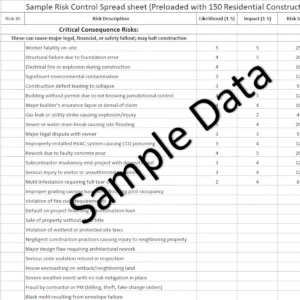
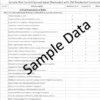
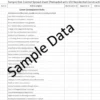
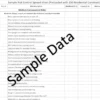
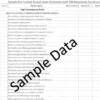
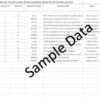
Managing project risks requires a structured process, especially in residential construction where timelines, budgets, and safety are tightly connected. This Residential Risk Management Spreadsheet Template is designed to help builders, contractors, and project managers move from reactive problem-solving to proactive risk control—before small issues turn into costly delays. The spreadsheet comes with 150 Risks faced by residential home builders and is easily modified to add risks as they become known.
This practical, easy-to-use template guides you through every critical stage of risk management, including:
- Identifying potential risks related to design changes, labor availability, material delays, inspections, weather events, subcontractor performance, and site safety
- Evaluating probability and impact using clear scoring criteria so risks are assessed consistently, not emotionally
- Prioritizing risks to focus attention and resources where they matter most
- Selecting response actions such as avoid, mitigate, transfer, accept, or exploit—each explained with real-world residential construction examples
- Monitoring risks throughout the project lifecycle, from pre-construction planning to final walkthrough and closeout
The spreadsheet is structured to support collaboration, making it easy to share with owners, supervisors, and stakeholders. Built-in tracking fields allow you to document ownership, response status, review dates, and lessons learned—helping your team improve on every future project.
Included with the template is a detailed Risk Response Guide that goes beyond theory. It provides practical examples, proven best practices, and common pitfalls to avoid, such as underestimating schedule risk, failing to assign accountability, or ignoring early warning signs. This guide helps ensure risks are not just identified, but actively managed.
How the Residential Risk Management Spreadsheet Improves Control
The Residential Risk Management Spreadsheet centralizes all risk data in one clear location. This structure helps builders, remodelers, and homeowners maintain visibility throughout the project. Each row captures a single risk using clear and consistent fields. You document the cause, potential outcome, and affected project area.
The spreadsheet template uses scoring fields to measure probability and impact. This scoring system supports objective decision-making. High-risk items stand out quickly and demand immediate attention. Lower risks remain visible without distracting from critical issues.
The template encourages proactive planning instead of reactive problem solving. You identify risks before they disrupt schedules or budgets. This approach reduces costly delays and surprise expenses. It also improves communication between contractors, clients, and stakeholders.
The template walks you step by step through the core phases of effective risk management. First, it helps you identify potential risks across every stage of a residential project, including design changes, permitting delays, labor shortages, material price fluctuations, weather disruptions, safety concerns, and inspection issues. By documenting risks early, teams can avoid surprises that often lead to costly delays or disputes.
Built-in prioritization columns guide you toward the most effective response strategy. You decide whether to avoid, mitigate, transfer, or accept each risk. The spreadsheet also supports positive risk opportunities. You can exploit opportunities that add value or efficiency.
Whether you’re overseeing a single custom home or multiple residential builds, this Residential Risk Management Spreadsheet Template tool helps protect your schedule, control costs, and reduce surprises. Learn more and strengthen your risk management process at IfYourHouseCouldTalk.com or MackPro.us ! !